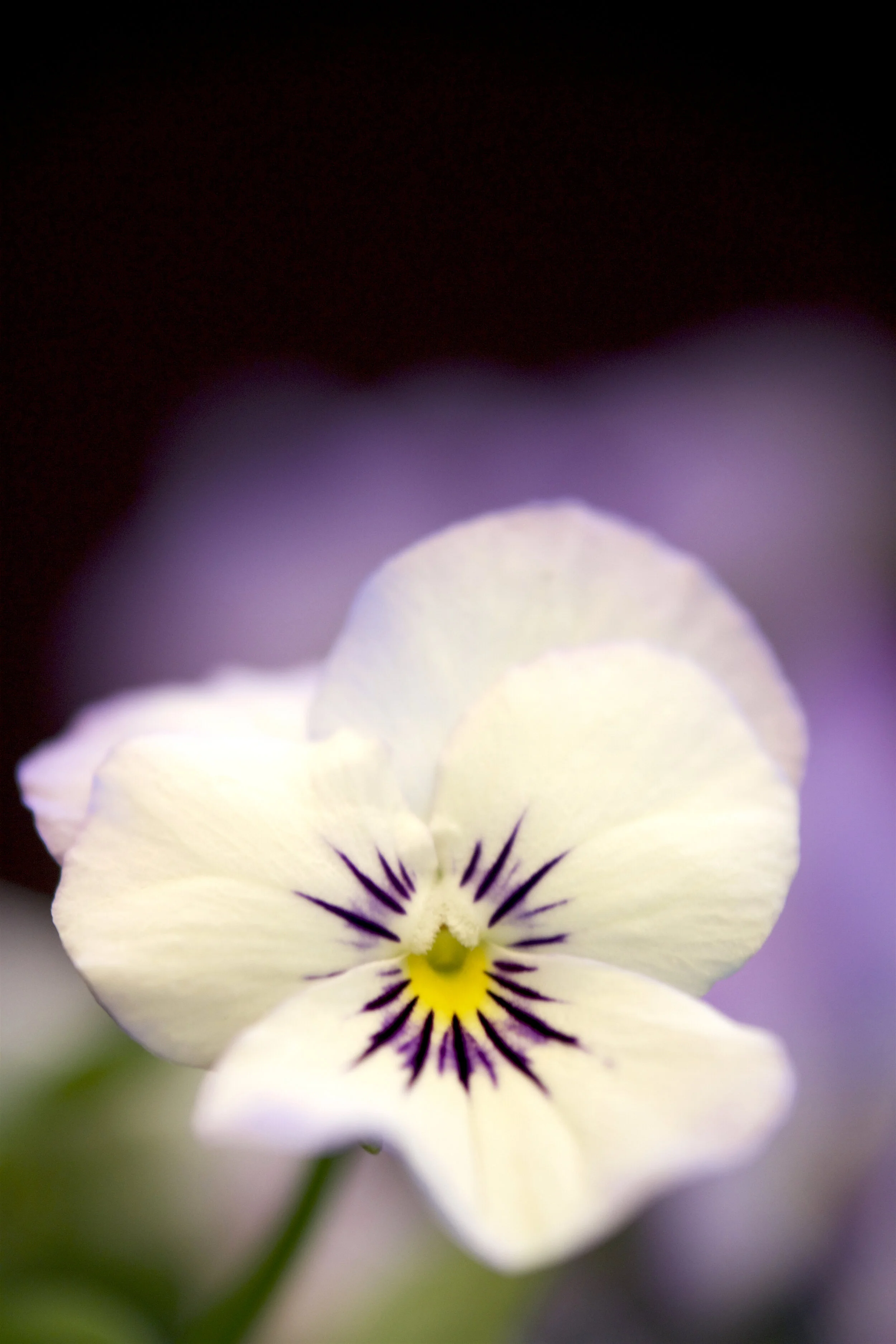
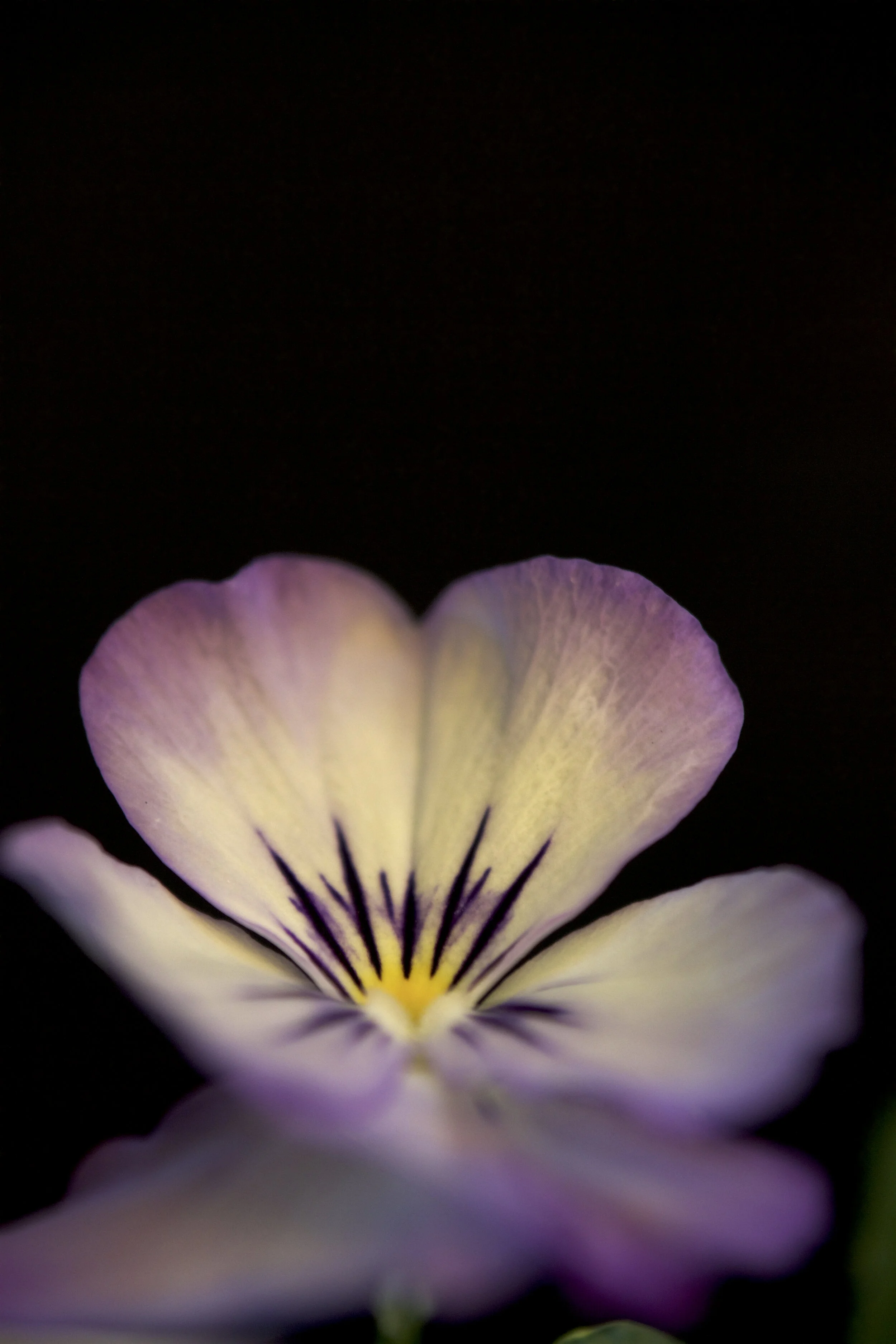
Viola x wittrockiana
Family: Violaceae
Order: Violales
Class: Magnoliopsida
Ethnobotanical Properties: Aids in the treatment of eczema, asthma, and epilepsy.
Companion Plants: Myosotis sylvatica, Iberis sempervirens, Erysimum ‘Apricot Twist’
Soil pH: Acid, Alkaline, Neutral
This delicate, yet hardy, ornamental species has also been referred to as the Viola Picotee Pansy, Lady's Delight, or the Viola Cornet (XP YTT). The darker violet specimen is called The Horned Violet, whereas the lighter specimen is known as the XP White Jump Up.
The pansy offers ecological benefits for pollinating insects, herbivores, and are widely used for consumption by humans. There are reported to be over 250 cultivars of pansies, and by 1835 there were already 400 varieties (with up to 600 species in the family Violaceae). It was back in the early 1800's when Lord Gambier and his loyal gardener William Thompson began cross-breeding various Viola species. Pansy comes from the French pensée, which translates to “thought”.
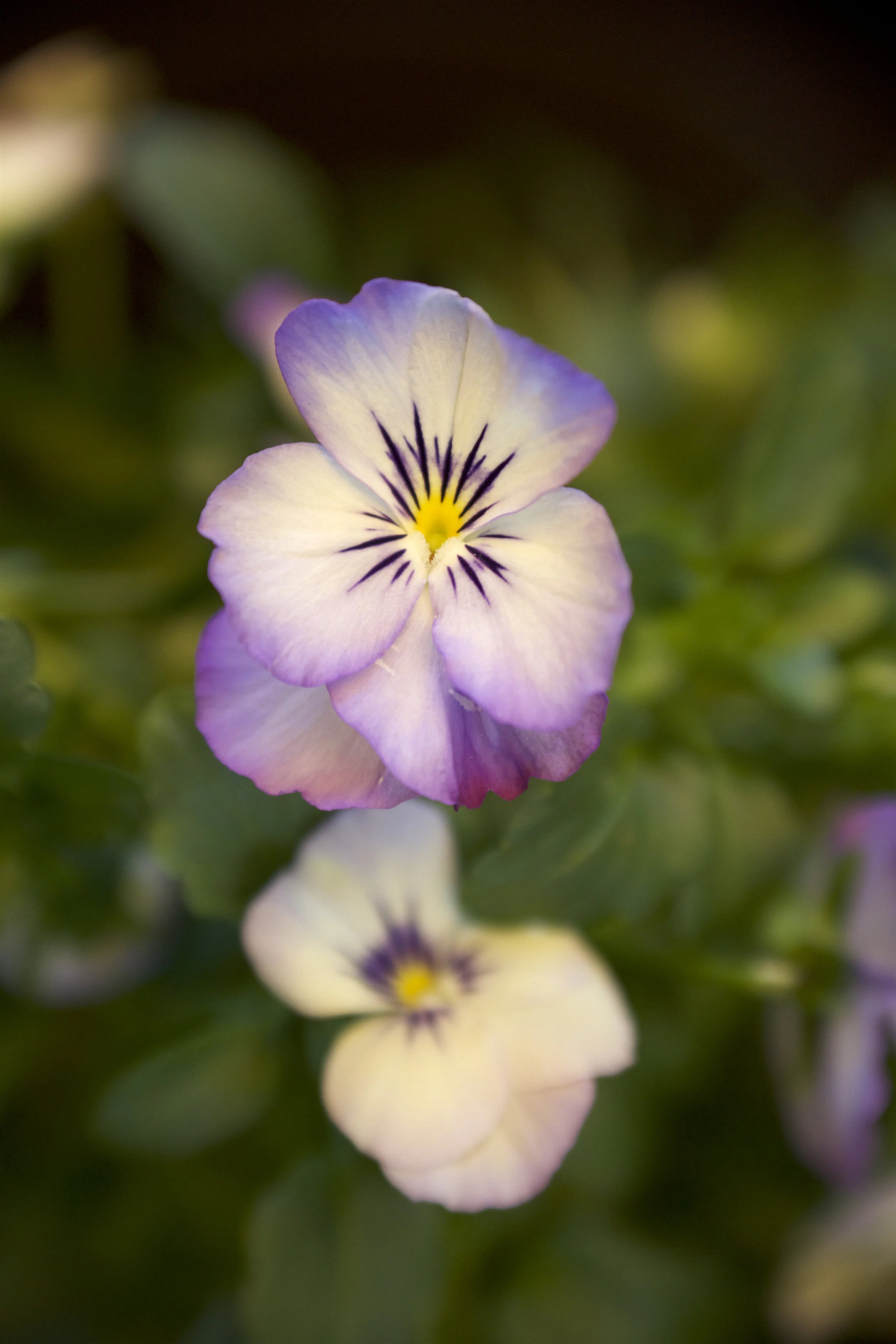
The garden pansy will bloom up to four months, even longer depending on the climate. This majestic tiny beast is a large-flowered hybrid plant cultivated as a garden flower. It is derived by hybridization from several species in the section Melanium of the genus Viola, particularly Viola tricolor, a wildflower of Europe and western Asia known as heartsease.
For centuries this specimen of medium-flowered Panola pansies have been known to sustain life and consistent blooms especially during the Winter months, even when they become slightly overwhelmed by snow or rainfall -as long as they are protected by a mulch covering. This low maintenance, and frost tolerant beauty will grow up to 9" tall. Muggy weather will result in rot -and this happens quickly. Flower production will come to a halt if the plant is exposed to afternoon sun. The pansy is known to suffer from stem rot (a soil-borne fungus), leaf spot (Ramularia deflectens -also a fungal infection), and the cucumber mosaic virus — transmitted by aphids. Spraying the plant with soapy water helps, but sometimes the aphids are rather relentless. Another enemy of the hardy pansy are slugs and snails -you may lay a gritty sand, or top-dress the soil with chipped bark.
Solitary flowers of the pansy are produced on long, meaty stalks -containing one pair of bracteoles, as well as 5 sepals which remain persistent even after blooming (they may even become enlarged). Each bloom contains five free stamens, short filaments that are set against the ovary, with only the lower two stamens having nectary spurs which hide away on the lowest petal.