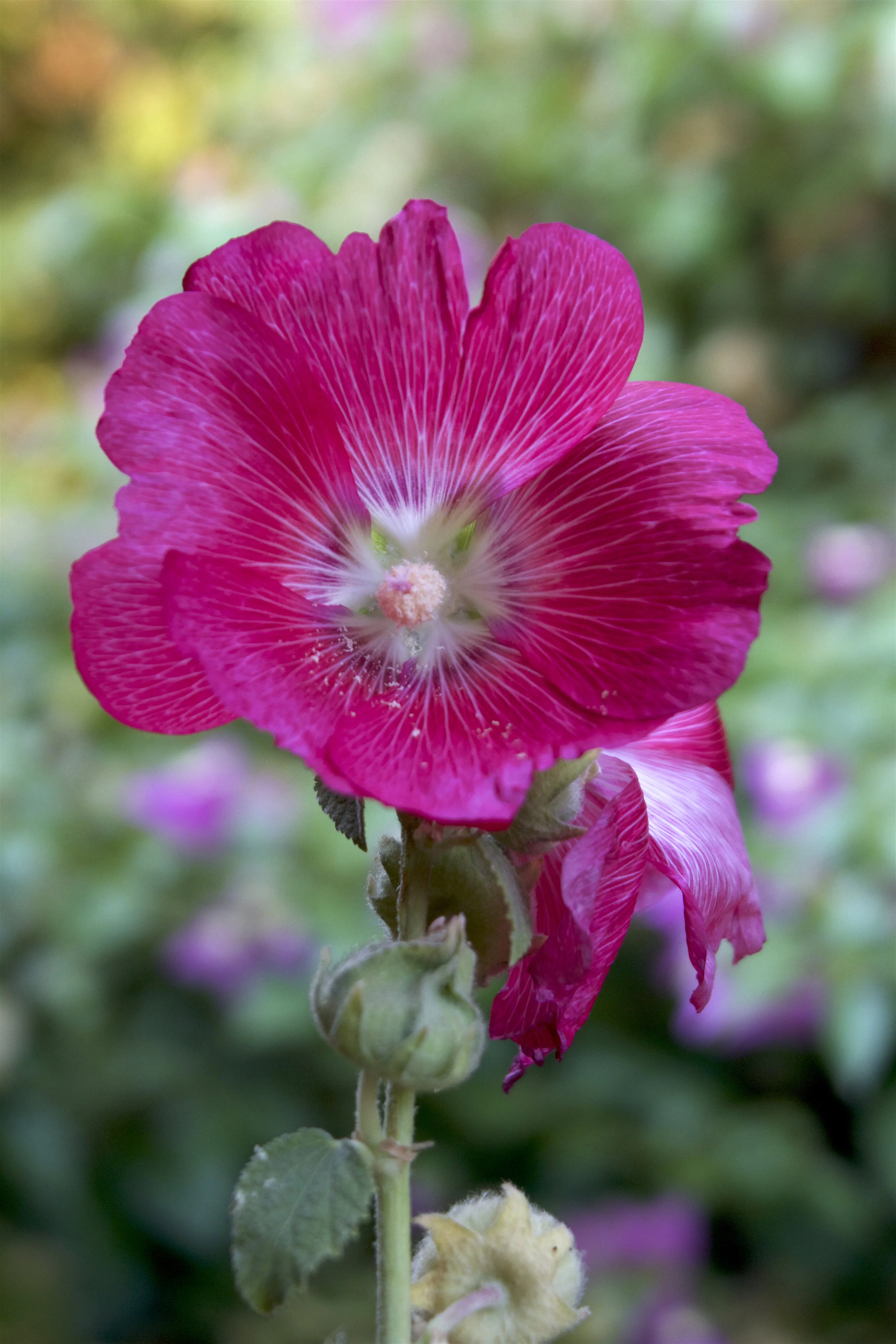
Alcea rosea
Family: Malvaceae - Mallows, mauves
Order: Malvales
Class: Magnoliopsida – Dicotyledons
Ethnobotanical Properties: Ethnobotanical Properties: Roots can be used as an astringent, and to treat loss of appetite. Petals are useful for the treatment of constipation, respiratory issues, and improve blood circulation. Each can also be used to treat inflammation of the kidneys, and the womb/vaginal cavity.
Companion Plants: Rudbeckia maxima (large Coneflower), Leucanthemum x superbum (Shasta Daisy), Monardra didyma (Bee Balm), Hydrangea aborescens.
Soil pH: 6.0 - 8.0
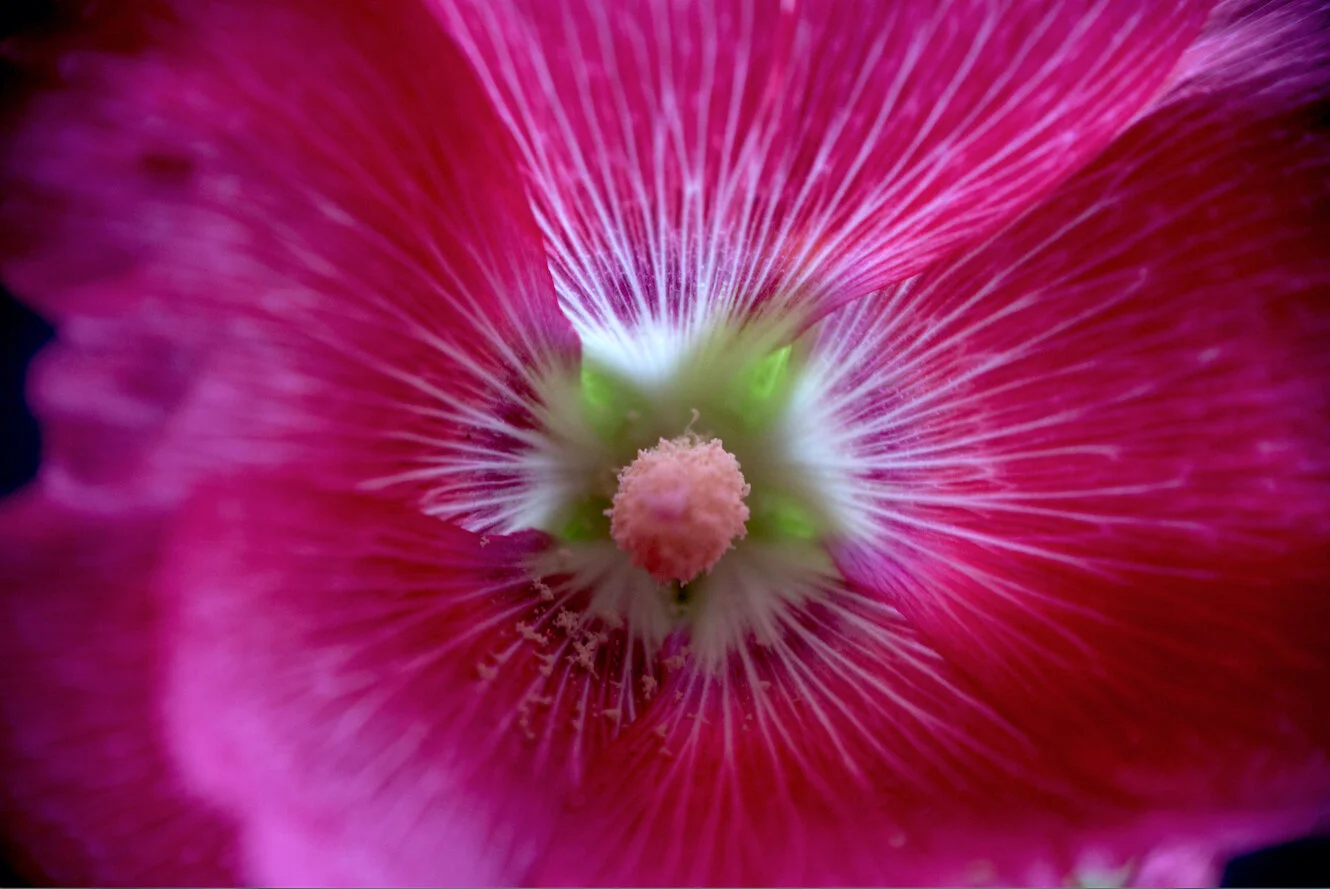
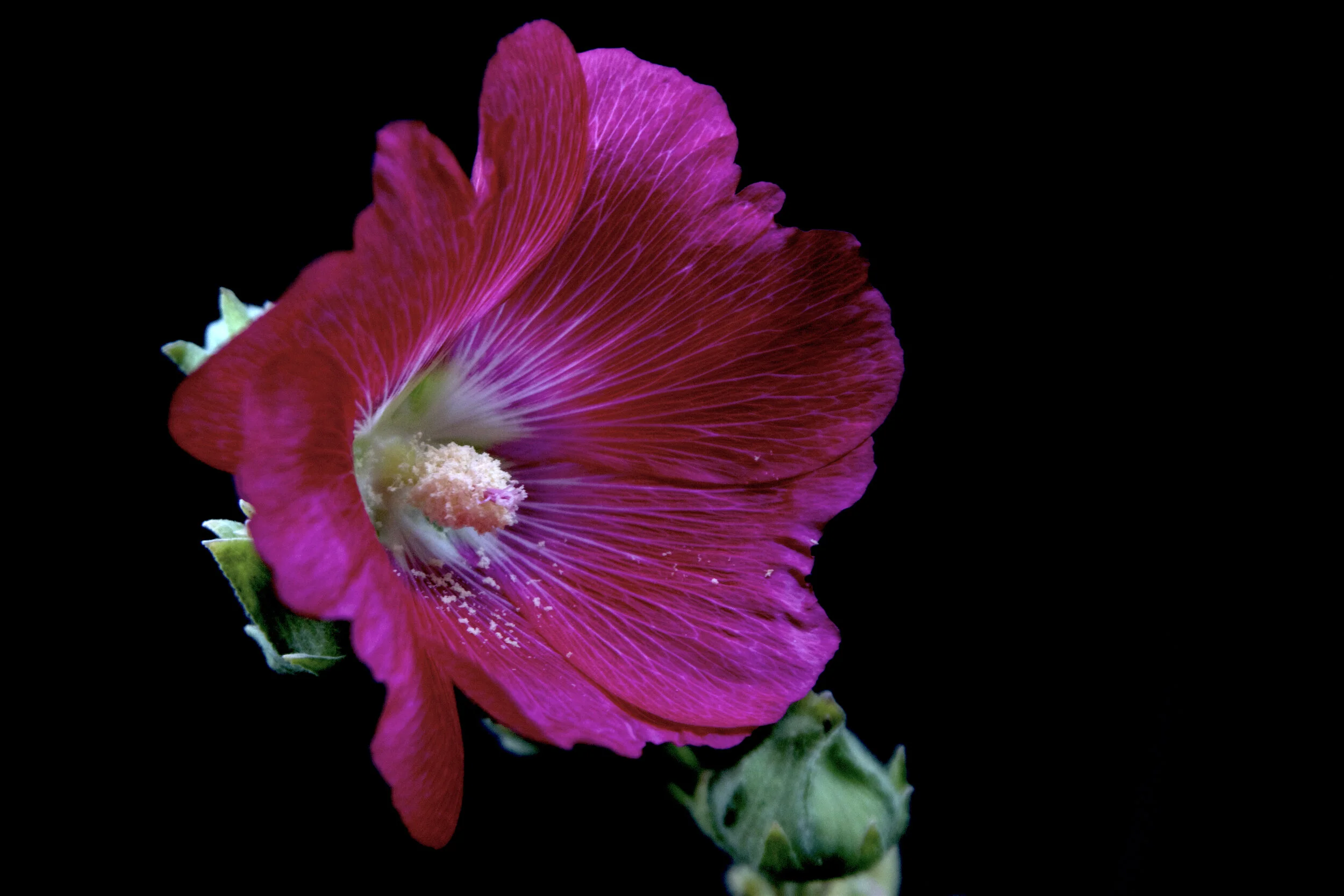
Originating from the eastern Mediterranean, and of the Mallow family, arrives the Alcea rosea or the common Hollyhock. As a dual-sexed perennial it is said that the petals, as well as the roots, can be dried and used as a tea.
The Hollyhock will grow as tall as eight feet, in flower beds that are typically 8 to 10 feet wide. They will tenaciously self-seed; this leads to the opportunity for the plant to become slightly invasive, depending on where it has been planted. You may find these sprouting up just about everywhere you hike if you are in the mountains, or in a more desert climate. They even tend to pop-up between the barging bristles of certain cacti -as legend has it, these perennials prefer dry soil. Although, we always tend to have a difficult time cultivating them from seed, once they do begin to sprout they will last a long while, especially if you make sure to plant them alongside other companion plants (as stated above) -the zinnia or marigold make an admirable match for the Hollyhock environment.
These specimens are host plants to the luxurious Painted Lady Larvae (caterpillar) -which makes for a perfect shelter as these creatures lay their eggs onto the the leaves. The egg is mint green in color -the barrel-shaped eggs are laid singly onto the leaves and will hatch within in 3-5 days. The caterpillar larva has five instars over a 12-18 day period. The Pupa: Each chrysalis stage lasts about 10 days. Overall the lifespan of the painted lady is 12 months. But beware, as they are very territorial of their habitat, especially toward other types of caterpillars. If you're interested in learning more about the Hollyhocks loyal companion, the Painted Lady can be studied (and purchased) at Carolina.com -a database for the care of many different living organisms.